

The Great Defender of Life Dinner: November 7th, 2025 Honoring Dr. Christina Francis and Anne Conlon

WILLIAM BLACKBURN
My name is William Blackburn, I am the son of Ross Blackburn, 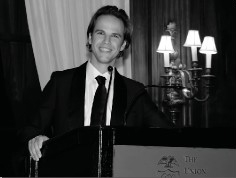 who is a contributor to the Human Life Review. The first Great Defender of Life dinner that I came to, I was 13—dad brought me out—and I was just about the youngest person at the dinner, and—ladies and gentlemen, Miss Oklahoma was also at the dinner! From that point on, I was, needless to say, smitten with the Human Life Review, which leads me to where I am today. I get to work with the Human Life Review, which is an incredible honor. I have worked for several non-profits, and I can say that one of the things that is special and unique about the Human Life Review is that it is not just a vision but a family legacy—Maria McFadden Maffucci picked up where her father left off, which leads us to where we are today, over 50 years after its founding.
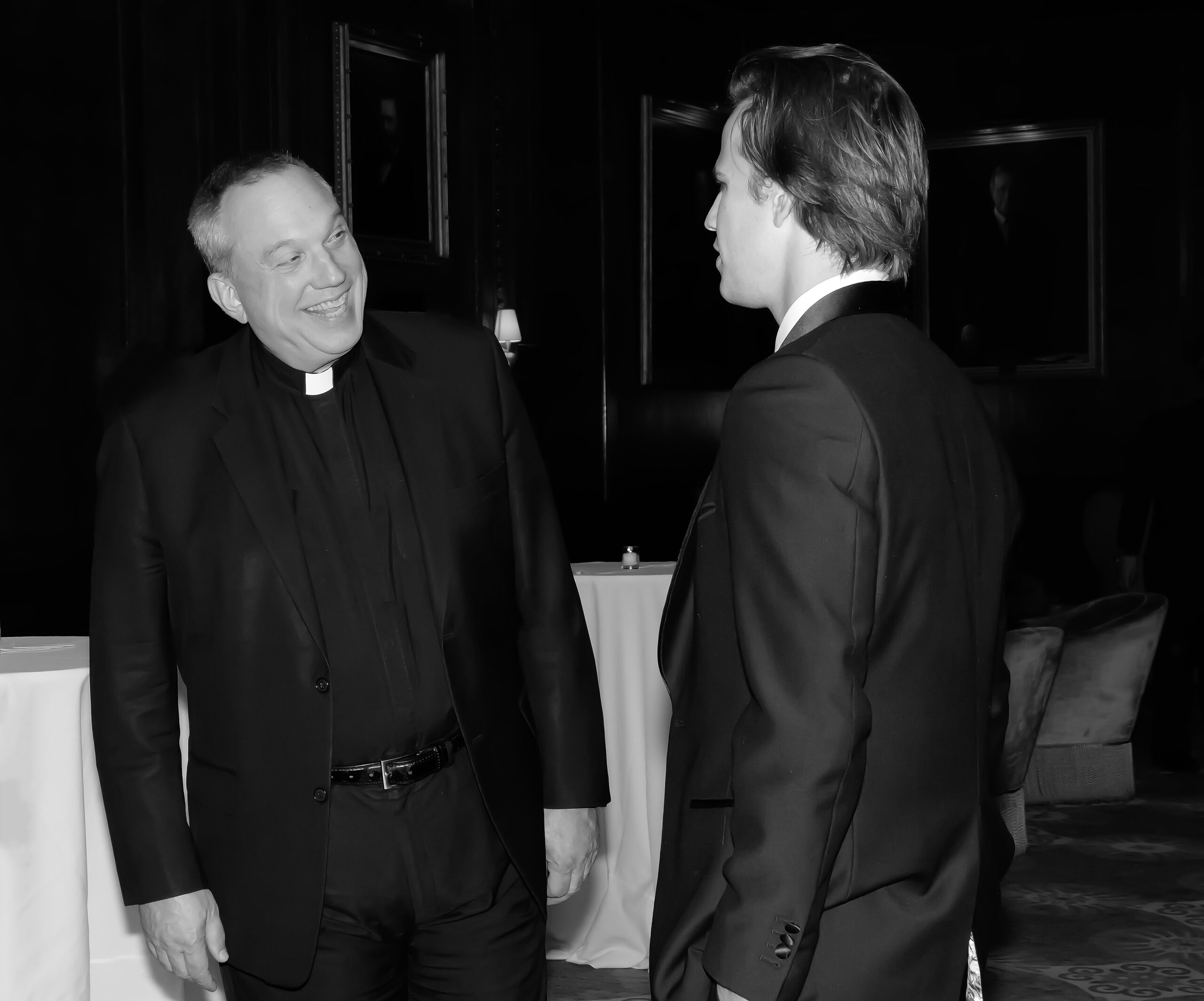
Fr. David Poecking chats with MC William Blackburn
FR. DAVID POECKING
God, our creator. Over the formless and empty waters your spirit breathed light and life. And from the weary people your spirit evoked a vision and beauty. Make us grateful for your work of creation. Especially the gift of every human being and most especially every child whose presence in the womb and in the world be-tokens our infinite dignity and our eternal destiny.
Bless those whom we honor tonight: Doctor Chris-tina Francis and Anne Conlon, each of whom has brought light and life to those in need, imitating your divine mercy. Pour out on this gathering your spirit, Lord and giver of life, that you may animate our fellowship tonight, that you may inspire our labors for the lives of the unborn, for their mothers and fathers, and for all who serve and protect them.
HELEN ALVARÉ
I am at a loss to know how I received the honor of honoring and introducing Anne Conlon. Even if I wasn’t familiar with her intellectual heft and skills as an editor, I would have felt insufficiently “cool” to preface a woman I have always put at the top of the “cool” pyramid. Her demeanor, her way of speaking, her resume, her style, wow . . . She had me the first time I met her. . . wearing all black in a very Manhattan way . . .
But then, you consider in addition to all those initial impressions, her record of shaping and marshaling and polishing the intellectual side of the pro-life movement. Her instincts about the topics to pursue, the right author for the right task . . . Her instincts about how to make an argument sing, . . . how to sharpen a point . . . how and when to say a hard truth in a way that, while bracing, even sometimes shocking (because isn’t killing shocking?), . . . was always true and always necessary.
She is a hero to the pro-life movement which is so accustomed to being caricatured as anti-intellectual, under-educated, fideistic, anti-science, and anti-women. Such a movement needs its cool, confident, credentialed, cerebral cats, and Anne is all that. People who take the talents God gave them and put them at the service of something big and good, in the style of Etienne Gilson’s “Intelligence in the Service of Christ.” People about whom others could say: “that woman would succeed anywhere she went, but look . . .look . . . she chose pro-life.”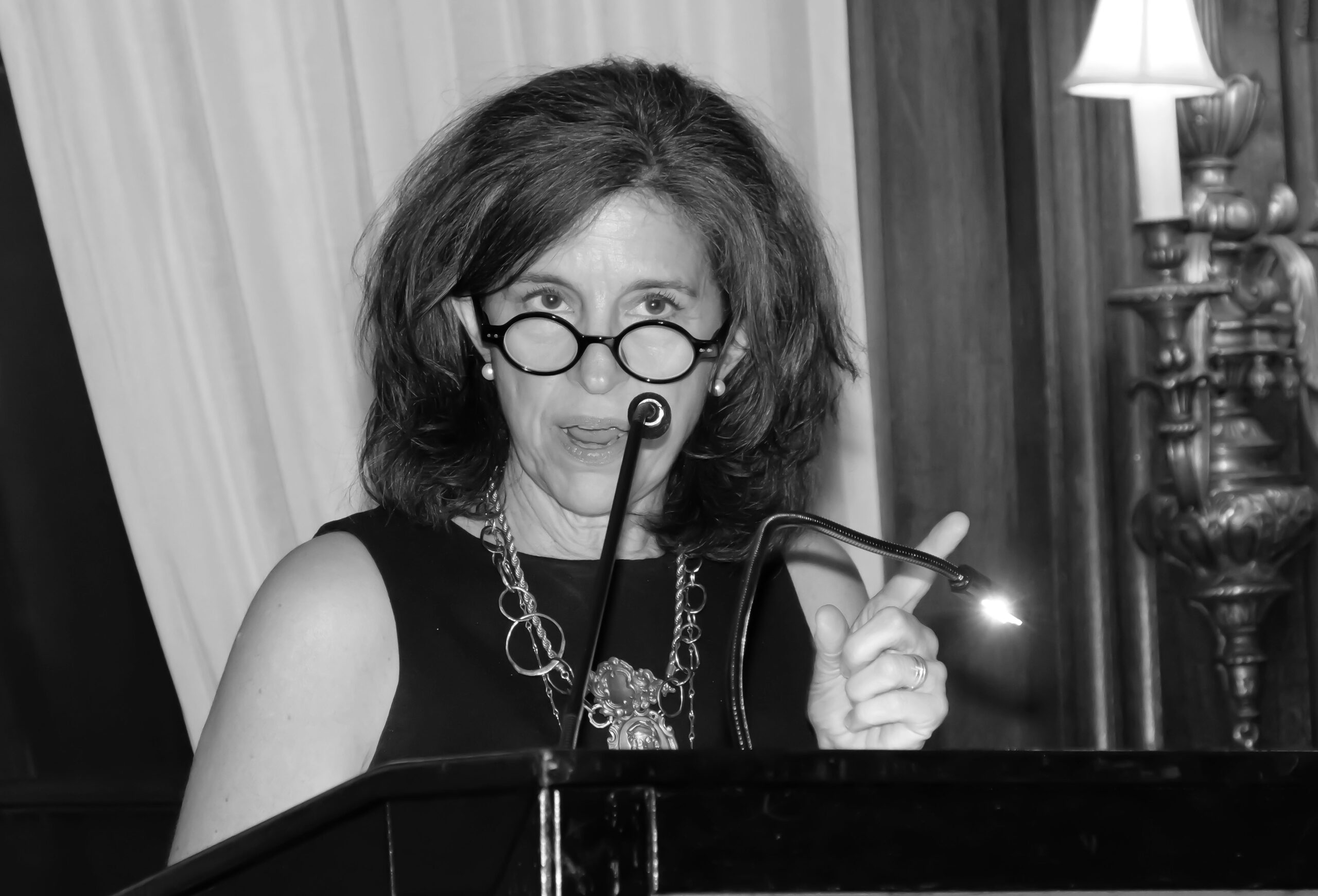
In Anne’s case, her service was making sure that the record of public debate over abortion was preserved in sparkling form. And that the wide variety of actions and arguments and players and proposals and personalities and fields —constituting what we all know lovingly as the pro-life movement in the US—could represent themselves in the most clear and reasonable fashion; in the midst not only of elite scorn, but of sometimes serious disagreement within the movement itself. And all the while knowing—as she once said—that the arguments against abortion were all present from the very beginning of the debate . . . but needing to be presented to new generations in a way that was fresh, and attuned to the “signs of their times.”
While Anne was rarely in the media spotlight herself, when she was, she shone, with the same gift of words she shared with all those she edited, brilliantly skewering, for example, Notre Dame’s decision to honor Obama who used his podium to pretend to call for human rights for all,… and her calling for the use of “logic” in the pro-life debate for those she said “old enough to remember it,” and pleading with Americans to stop substituting entertainment for use of their moral imaginations.
In sum . . . I love Anne, and her work, for many of the same reasons I have loved my mentor Cardinal O’Connor. Because in addition to their virtues on the professional and public planes . . . we have the persons themselves and how they love others. We all know Anne’s love for her family. Her love for her coworkers . . . her compatriots in arms. And I will add on a personal note, the love she showed me with her many “missives” as we called them, since my husband passed away a few years ago. As happens with the dynamic/physics of love, the love you showed US Anne is returned to YOU many-times over, in abundance. Carry on sister, and Godspeed.
MARIA MCFADDEN MAFFUCCI
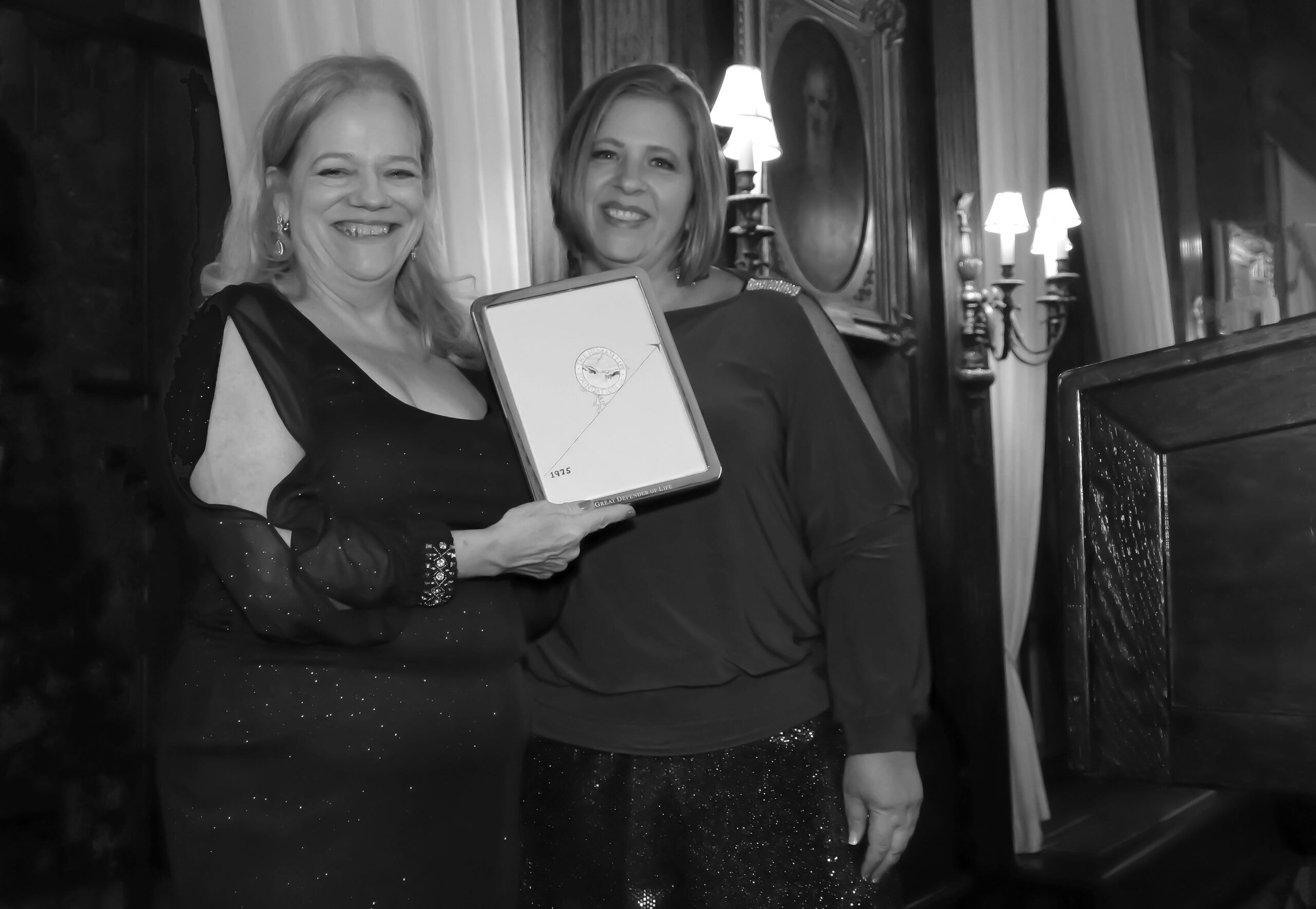
God works in mysterious ways, and sometimes ways that frustrate us. As some of you know, as we gather together to celebrate tonight, one of our stars is absent. Editor Anne Conlon, who we are saluting tonight, is unable to be here due to a medical situation with her husband, Raymond, who is also part of our HLF family. However, let us not be sad: You will hear from Anne, from Helen Alvaré, who Maria presents the Great Defender of Life award to Dr. Christina Francis will read Anne’s prepared remarks, and she will see the film of this evening, so we must show her the love and joy on our faces . . .
ANNE CONLON
Thank you, Helen, for all the nice things you may have just said about me. Helen and I have an old-fashioned letter-driven friendship, one that has endured and deepened over three decades, even though we’ve actually met in person only about two handfuls of times. And thanks to Jane Devanny, who promotes our Great Defender of Life dinner every year with such gusto, for her lovely tribute. I was looking forward to my close-up; alas, fate intervened. But my remarks were already written—I never speak in public without a script!—and I couldn’t ask for a more gifted understudy, so to speak, than Helen Alvaré.
Thirty years ago, I wrote to National Review about a job opening there. At the time I was a copywriter, mentored by the kind of mid-century characters in the television drama Mad Men. The challenge of finding fresh ways to sell familiar products like perfume and cognac was enjoyable, fun even. But I was ambivalent about continuing a career in advertising. I’d just finished up a long-term freelance project—a so-called tactical guide for Mercedes Benz dealers—when I saw the notice in National Review. I was 43 years old, I wrote in my letter, and looking to trade selling luxury goods for something different; something more serious.

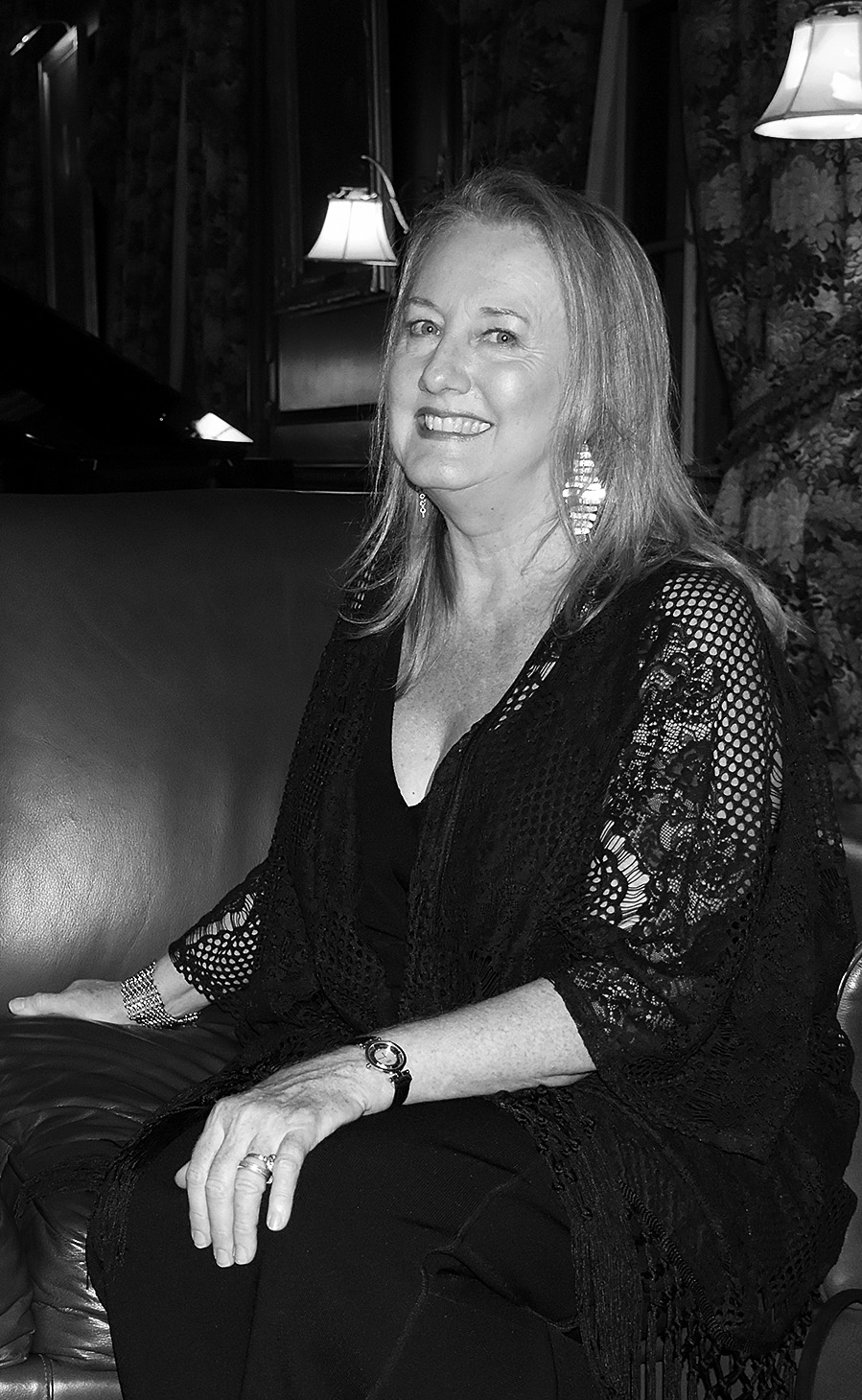
The Human Life Review will greatly miss Anne Conlon
I got a nice response. The position had been filled, but they would keep my letter and resume on file. And they did. Not long after that, when the Human Life Review was about to lose its managing editor, Jack Fowler gave my resume to Maria. She called and asked if I’d be interested in working for another journal, one associated with National Review but focused on bioethical issues like abortion and euthanasia. Now that sounded serious. I came in for an interview with Maria and her father Jim, bringing my portfolio, which they didn’t look at, and a few abortion-inspired letters to the editor, which they did. The Wall Street Journal had published one of them. Maybe that helped me get hired, I don’t know. But I suspect if they’d seen my “I am addicted to desire” ode to Opium—the perfume—you might not be saluting me tonight. That was 1995. I had no idea there was such a thing as a pro-life movement, let alone that Jim McFadden was a prominent member. Jim, who would die three and a half years later, was then two years into his life with cancer. The disease was baggage he brought to our relationship, gallantly brought. I remember him joking about his strong heart and lungs and how physically fit he otherwise was. Jim’s wife, and Maria’s mother, Faith Abbott, had just published Acts of Faith, her memoir of growing up in another movement I hadn’t heard of—Moral Re-Armament, an international one, she wrote in her book, that “believed it had been commissioned by God to renew the face of the earth.” Faith was a senior editor and frequent contributor to the Review, but she mostly worked at home back then. I met her for the first time here at the Union League Club at a book party in her honor. A gracious woman, with a beautifully lined face and an impish smile, she really did have me at hello . . . and all the way to goodbye. When she died in 2011, after her own valiant bout with cancer, she was a cherished mentor and friend.
Fast forward to 2025. I told Maria in January I would be retiring at the end of the year. It was a hard decision, but one prompted by personal responsibilities that made it inevitable. When she told me I’d be saluted at this dinner tonight, I was both touched—and terrified. What to say? What to say to Maria, especially, who along with her father took a chance on someone who abhorred abortion but had no publishing experience, hiring me on the spot and later honoring me with the title of editor. Well, what else to say but “Thank you.”
Thank you, Maria—and Faith—for bravely carrying on after Jim’s death, sparing me having to look for another job, knowing full well I would never find one I could love as I had come to love this one. Thanks to Ellen Wilson Fielding, our senior editor and magnificent essayist who mentored me in the fine art of editing. My nickname for her is Ezra, after Ezra Pound, to whom Eliot dedicated The Waste Land, calling him il miglior fabbro, the “better craftsman.” Which indeed Ellen is. And thanks, too, to Mary Meehan, our now retired senior editor and model of dedication to the pro-life cause. An ace investigative reporter, Mary could have had a far more lucrative career in mainstream journalism but chose the “getting by on a shoestring” life of writing important stories for journals like the Human Life Review.
Thanks to all those who have supported us through the years, even as, early on, some wondered whether Jim’s ship would sail without him at the helm. Though I must say that with the indefatigable Rose Flynn DeMaio at the financial helm, as she has been since long before I came onboard, there should have been no doubt. Thank you, Rose, for keeping us on course through fund-raising swells and slumps, and most of all, for being another cherished friend. Thank you to everyone who joins us tonight. To say the Review’s friends and supporters are like an extended family is no exaggeration. I remember many times over the years when someone, maybe one of you, either wrote or called the office in response to one of Jim or Maria’s letters, saying they felt they knew the writer even though they’d never met. It was this way too for William Murchison, our longtime senior editor whose unexpected death last month has been such a jolt. I don’t believe Bill ever met Jim. Yet here’s how he described their relationship in his 2009 Great Defender of Life speech:
“We bonded in a wonderful way over the many years. And I came not only to admire that man, but to love him profoundly for what he stood for, and for what he did. Jim McFadden invited me into this civilizational warfare.”
Bill Murchison wrote over 100 articles for us. If there is a thread running through them, it is that attention must be paid—to God. His last one, “There Are Boys; There Are Girls,” appears in our Fall issue. As the title no doubt cued you, it deals with transgender ideology’s attack on the age-old understanding of human sexuality. Here’s Bill, in the distinctive voice our readers will certainly recognize.
Something large happened way “out there”—far longer ago than once-upon-a-time. And man came onto the face of the earth. And woman. The Old Testament tells the story in a fashion that is not exactly second-nature to grasp in its fullness and beauty, but which never surrenders our attention. We are still working through it all, putting in place pieces in a gigantic puzzle unlikely to be solved—at least by us.
So you could say if you wanted to that we are guessing, acting with only partial knowledge—whatever “full” knowledge might mean, given the tendency of new “facts” constantly to present themselves to human gaze.
We are not guessing, nevertheless, when we say, “That’s a boy.” And, “That’s a girl.” Our eyes tell us. The brain kicks in.
The brain kicks in is a good way to describe Jim McFadden’s shocked response to Roe v. Wade, the breathtaking judicial undoing of centuries of thinking about life—and death. “There has to be a record,” he insisted, “no one should be able to say, whatever happens, that they didn’t know what’s really going on here.” When I came to the Review, that record resided in a shelf full of bound volumes. Pat O’Brien, our dear friend and benefactor, joined us as a volunteer in 2003, and proceeded to spearhead a project to digitize all those print issues. We were also joined in 2003 by now managing editor Christina McFadden Angelopoulos—who immediately set about creating a Master Index, and soon after, redesigned our website, uploading the complete Human Life Review Archive, along with the Index, which Ida Paz, our indispensable production coordinator, updates with each new issue we publish. Jim McLaughlin, our longtime Board chairman, and a lawyer, was an invaluable guide as we made our way into online publishing.
What a unique and unparalleled education is waiting to be had in our Archive for anyone who wants to know what’s really been going on these last fifty years. And what a rich resource for disinterested future historians who will one day tell the whole story to people who will then wonder, as George McKenna memorably put it in a symposium earlier this year: “Did they really do that? And to children?” Yes, someone might answer, they did. There’s a record.
It’s been a privilege to mind that record for going on three decades. Truly a labor of love. Serious, yes, but not without a measure of fun, too. I wish Mary Rose Somarriba and Chris Reilly, the Review’s new co-editors, all the best as they take over from me. And I send Dr. Christina Francis, who is so deserving of the honor about to be bestowed on her, a heartfelt thank you for all she is doing to remind professional medical associations that they are in the business of life—not death. My husband Raymond and son Gabriel and I have been living in medical world these last several days. And I am happy to report that our experience at the ground level has been all good and that the patient is on the mend.
WILLIAM BLACKBURN
And now, to introduce our Great Defender of Life, I am introducing Kate Connolly. Kate Connolly is New York-based. She works in PR and communications, specializing in storytelling, media relations and crisis communications. She’s held leadership roles in the National September 11th Memorial and Museum, Saint Patrick’s Cathedral and the Archdiocese of New York and now co-leads the boutique agency Honor and Gold.
Please welcome her to the stage.
KATE MONAGHAN CONNOLLY
Thank you, William. Thank you, Maria. It’s an honor to be here. I’m also a reader from childhood, and my parents are longtime supporters. I’d like to start with just a very short anecdote as I introduce our honoree.
A few years ago, I found myself in great need of a life-affirming physician. The doctor giving me the diagnosis for my son said only this: “Most women terminate when they receive this diagnosis.”
He offered no words of comfort and no alternatives. Walking away, my husband and I were heartbroken for many reasons, and one of them was the stark realization that women receiving diagnoses like ours often don’t stand a chance. If we had not already been pro-life, we might have simply followed the advice of our doctor. Doctors, especially OBGYNs, are on the front lines of the fight to protect both women and their pre-born children.
We need physicians who are willing to find solutions other than death, solutions that affirm life even in the face of hardship, uncertainty, or fear. It was through my work with Peche, the public relations firm that represents the American Association of Pro-Life OBGYNs, also known as AAPLOG, that I had the privilege of getting to know one such physician: Doctor Christina Francis.
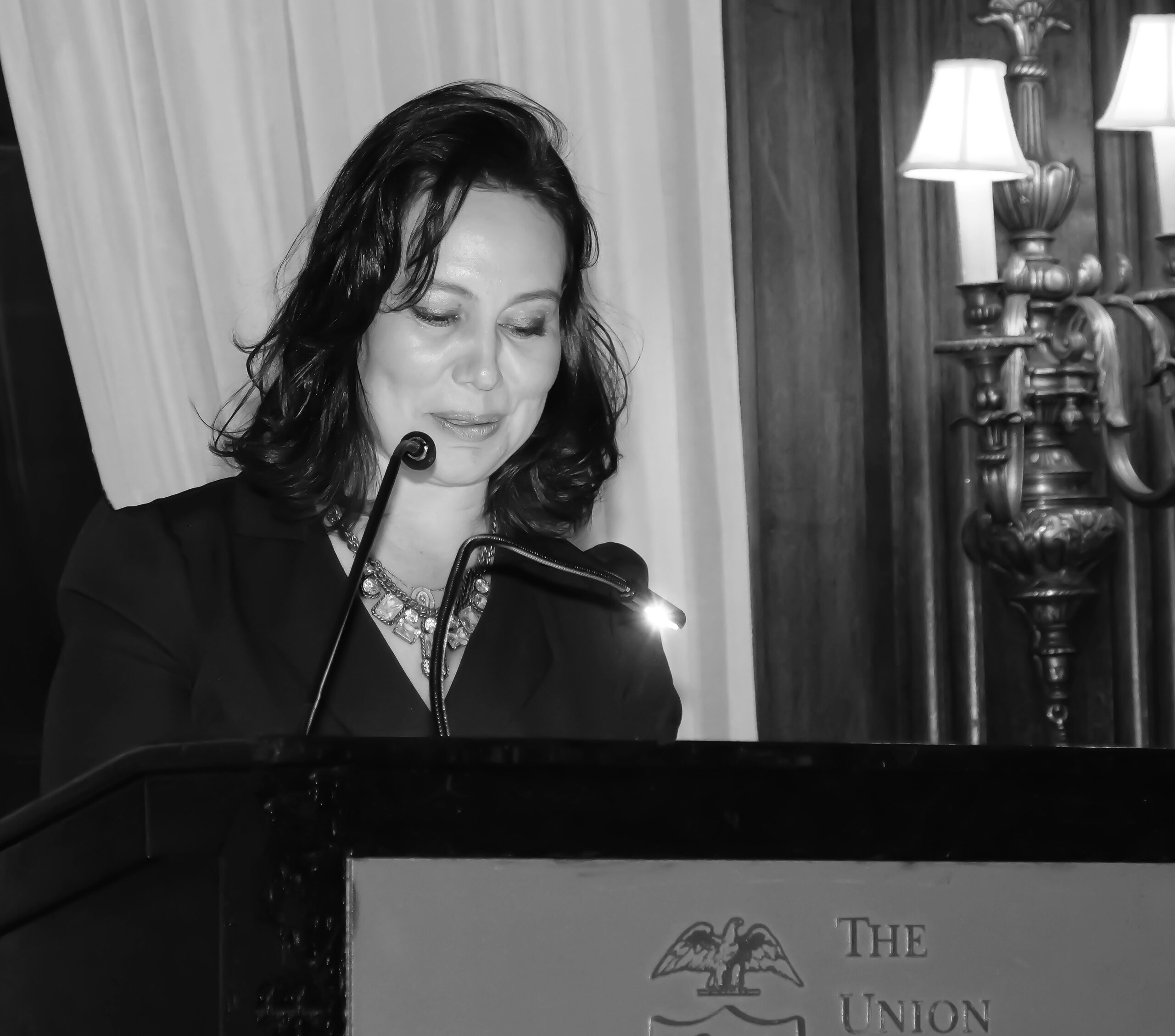
Doctor Francis is a board-certified OBGYN and OB-GYN hospitalist and the CEO of AAPLOG, the largest life-affirming medical organization in the world, with more than 8,000 members. She has always had a passion for human rights, spending years in various countries working tirelessly on behalf of women and children. She served for three years as the only OBGYN at a mission hospital in rural Kenya, before returning to the US to continue her work for women and children, both here and abroad, who are too often victims of the abortion industry.
Her writing has appeared in The Wall Street Journal, Newsweek, and USA Today, and she has been interviewed countless times. In addition to her role at AAPLOG, she’s an associate scholar with the Charlotte Lozier Institute, a board member of Indiana Right to Life, and a physician member of the Abortion Pill Reversal Network. Doctor Francis is an incredible physician, leader, and dear friend, and it is my great honor to introduce her this evening as the recipient of this year’s Great Defender of Life Award.
Please join me in welcoming Doctor Christina Francis.
DR. CHRISTINA FRANCIS 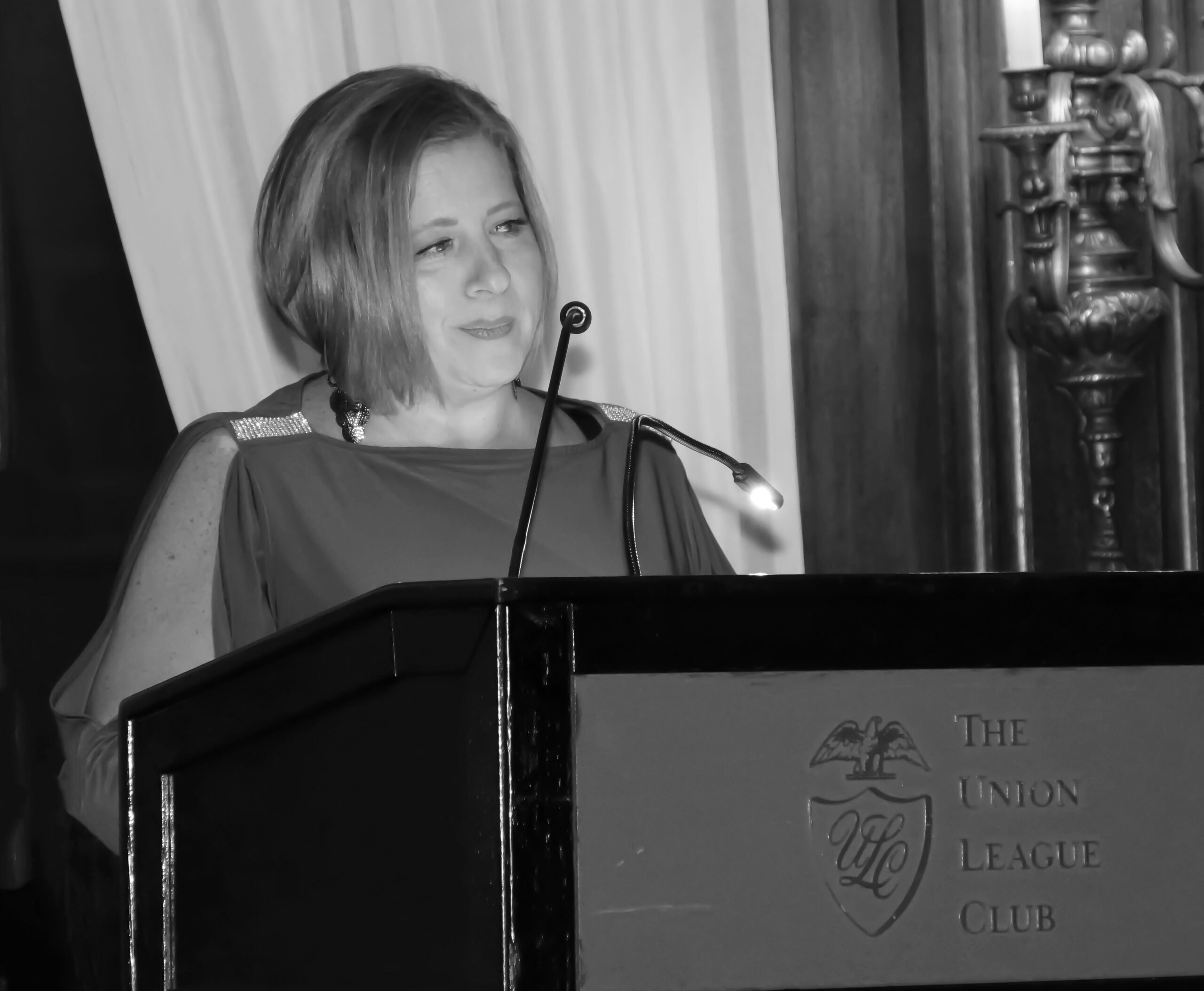
Thank you, Kate, for the kind introduction. And I would like to thank Maria and the entire team at Human Life Review and the Human Life Foundation for the amazing honor of being selected to represent pro-life medical professionals being honored as Great Defenders of Life!
I am so grateful that the Human Life Foundation has decided to recognize the significant contribution, and sacrifices, that pro-life medical professionals make for the cause of life—at the beginning of life, the end, and everywhere in between. This is only accomplished due to the hard work of many of the people in this room who support so sacrificially the work that AAPLOG is doing. In fact, we play a critical role in ensuring that life is respected and protected. And this weighty responsibility, is one, unfortunately, that has been abdicated by so many within my profession over the last nearly 60 years. However, the American Association of Prolife OB/GYNs, the largest professional medical organization of pro-life physicians with approximately 8000 members, is changing that.
And our aim is to do this through respectful, compassionate and informed conversation—in the public, with our colleagues, and with our patients. And we are providing clarity in the midst of the confusion by speaking the truth about what abortion is and why it is not healthcare. This is something we have in common with Human Life Review—who since 1975 has been dedicated to civilized discussion of the legal, philosophical, medical, and scientific perspectives on life issues. AAPLOG was started in 1973 for a very similar reason.
We were started as a special interest group within ACOG, the American College of OB/GYNs, when their leadership went against the views of the majority of their membership and filed pro-abortion amicus briefs in both the Roe and Doe cases. We were formed in order to ensure that open dialogue continued within ACOG about abortion and that the voices of pro-life physicians advocating for our patients would continue to be heard. And the voices of our group (their largest special interest group) were heard for many years.
Unfortunately, beginning in the mid-90s, an increasing hostility towards life-affirming medical care began and has grown progressively worse ever since. From claiming that physician conscience should not be tolerated if it interferes with abortion access to stating that physicians who won’t perform abortions must refer for them and also relocate their practice in close proximity to someone who will.
From requiring that abortion training be available to all OB residents (regard-less of the religious or moral convictions of the training institution) to now requiring abortion training as standard training for all programs and all residents. From launching a smear campaign against pregnancy centers and labeling them as fake clinics to bolstering the attacks across the country against abortion pill reversal, denying women the choice to save their child when they regret their abortion decision.
And now, on top of spreading lies that state pro-life laws are killing women and preventing physicians from providing life-saving care, they have tried to completely silence the voices of any dissenters.
On the day I took over as CEO of AAPLOG in 2023, we were kicked out of an ACOG conference we had exhibited at for years—one for those educating the next generation of medicine—simply because we are pro-life. When we arranged for an academic and scientific debate on the issue of abortion at Duke University, ACOG refused to participate—stating that the role of abortion in our patients’ lives is “settled science.”
And, to try and ensure that all OB/GYNs would be scared to say anything other than full endorsement of induced abortion after the Dobbs decision, our board certification entity has threatened to revoke the board certification of any OB/GYN found to be spreading mis- or disinformation about abortion or any other “essential healthcare service.”
All of this despite the fact that induced abortion, which intends the death of my fetal patient, carries zero health benefits for my maternal patient and often causes significant mental and or physical harm for her. It also directly contradicts the oath I took as a physician to never intentionally harm or kill my patients. These are just some of the reasons that 76-93 percent of OB/ GYN’s do NOT perform them.
Abortion is not a political issue. It is a moral and human rights issue that has been politicized. This politicization has caused deep divisions in our culture as well as my profession. And it is harming countless women and children.
So how do we begin to heal that division and help others see the beauty of life and the benefits of life-affirming healthcare? I think it’s by having respectful and thoughtful dialogue (and, when needed, debate) first with those in our sphere of influence and then in the larger public square.
These are often not easy conversations to have but have them we must. The good news is that there are simple tools and crucial information that we can utilize to help make these conversations fruitful. I was “trained up” in the pro-life movement by an amazing pro-life apologist, Scott Klusendorf. He says that the case for life centers around a simple syllogism: It’s wrong to intentionally end the life of an innocent human being. Abortion intentionally ends the life of an innocent human being. Therefore, abortion is wrong.
While our conversations around abortion often necessitate slightly more nuance, this truly is the crux of the issue. One tactic to improve the chance of a productive conversation about a difficult topic is to do more listening than talking. In that listening, often you will be able to identify an area of agreement. For instance, you might say, “I agree that unplanned pregnancies are really difficult for women and they often feel like they don’t know where to turn.”
After identifying where you agree, then you can respectfully begin to differentiate your position. And a key to doing this is asking good questions.
Two very effective questions for this conversation are: What do you think abortion is and what makes you have that opinion? Their answers will give you very clear insight into why they support abortion, as well as more insight into who they are as a person (something I often overlook in my quest to be right). Using what or how questions allows them to see that you truly are interested in what they have to say without putting them on the defensive. It will also give you a chance to respond with some facts.
First, the sole intent of an induced abortion is to produce a dead baby. It is not an intervention intended to save the mother’s life, to treat a mis-carriage where the baby has already passed away or to treat an ectopic pregnancy. There are ethical and legal ways to care for women in these circumstances that do not require intentionally ending the life of their child. And this isn’t just prolifers’ definition of abortion—it’s the CDC’s. The verbal gymnastics by abortion supporters since the Dobbs decision to try to equate induced abortion with actual healthcare are not only meant to hide their true position, but they’re harmful for women as well.
Second, abortion is bad for women. Induced abortion causes a 7 times increased risk of suicide in addition to increasing the risk of depression, anxiety, and substance abuse. Surgical abortions significantly increase a woman’s risk of preterm birth in future pregnancies—not only putting the lives of her future children at risk as well, but also increasing her risk of cardiovascular disease and stroke. Abortions that are done before a woman carries a pregnancy to term increase her risk of breast cancer.
And currently, approximately two-thirds of abortions are being done via dangerous abortion drugs that are often dispensed online with no medical supervision—increasing women’s risks of complications like hemorrhage,
infection, and death as well as of forced abortions. This is not empowering—it’s demeaning, harmful, and deceptive.
Women and their children deserve better. This is something we all should be able to agree on. It is anti-feminist to tell a woman that the only way she can succeed in life is to deny the miracle of the life of her child and to intentionally end that life.
Abortion is a very temporary Band-Aid that makes us lazy as a society and as a medical profession. Rather than do the hard work of finding REAL solutions or improving medical treatments, abortion is touted as the panacea for everything. The pro-life physicians I represent care deeply about our patients and we understand that the true purpose of medicine is health, healing and wholeness. We understand that pregnancy is NOT a disease and death is NOT healthcare. And, we understand that though the laws in many states have changed, hearts and minds need to change even more. I know that seems like a daunting task, but I draw encouragement from the words of apologist Greg Koukl, who said that our job when we have hard conversations is not to change someone’s mind—that’s God’s job. Our job is to put a pebble in their shoe so that when they leave that conversation they can’t stop thinking about it.
This we can accomplish! Through exemplifying the beauty and benefits of life-affirming, as opposed to death-glorifying, healthcare. And through having winsome, robust, and respectful conversations—even when it’s hard and even when it’s risky.
It may be scary at first. But it just takes compassion, a commitment to truth and a little bit of courage. I will close with an excerpt from Alexander Solzhenitsyn’s essay “Live Not by Lies” because I think it’s as pertinent now as it was when it was written in the 1970s:
The simplest and most accessible key to our self-neglected liberation is this: personal non-participation in lies. Though lies may conceal everything, though lies may control everything, we should be obstinate about this one small point: let them be in control but without any help from any of us…
It is the easiest thing for us to do and the most destructive for the lies. Because when people renounce lies it cuts short their existence. Like a virus, they can survive only in a living organism . . .
This would not be an easy path, but the easiest of all possible ones. Not an easy path—but there are people among us, dozens of them, who have been observing all these conditions for years and who live by the truth. Therefore you will not be the first to take this path, you will join others! It will be easier and shorter if we embark on it in great and friendly numbers. If we are in thousands it will not be possible for them to do anything to anyone. If we are in tens of thousands we will not recognize our own country!
May it be so!
____________________________________________________________________________________________________________
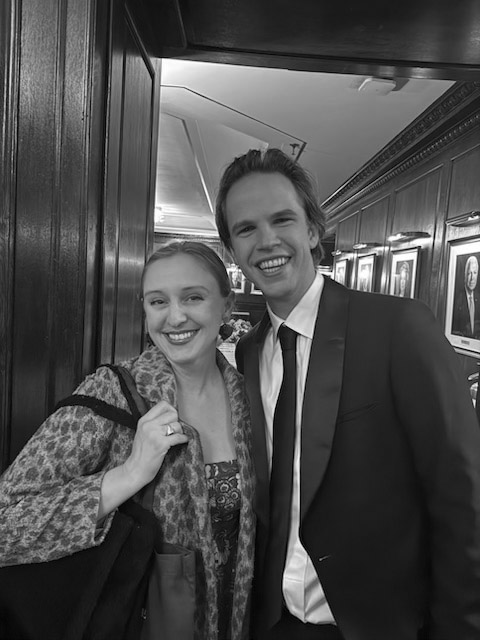
Mary Rose Somarriba and William Blackburn
When the hand that rocks the cradle rules the world, And the ground you thought was stable almost bursts, When you can’t see all the damage but it still hurts,
When all the promised actions turn to words,
And the dust settles from mushroom clouded burns, You feel so tired and sleepless nights just blur,
When all we want is love but it doesn’t come, So we settle for politics and drugs,
The world’s not black and white but we wish it was, But still all we want and need is love,
When bought and sold addictions take control, Between the barrel, the bottle, and the rope,
Scared as hell to move cause Hell’s so close, so close,
When the hand that rocks the cradle rules the world, Then every baby boy and baby girl,
Can laugh in awe and wonder, and feel their worth, Cause the hand that rocked their cradle made their world,
—William Blackburn and Eric Novakovich
GALLERY: