

The Cries of a Newborn

Locke is a film from a dozen years ago, a minor classic. It is also a life-affirming surprise.
The film opens with Locke (Tom Hardy) getting into his BMW at the end of a day of work. In the dark he sets out for London, a two hour drive, rather than his home where his wife and two boys await him with plans to watch a football (soccer) game together. He turns to London because he has learned that Bethan, a woman with whom he slept once on a work trip seven months earlier, has gone into premature labor. A child is about to be born and he is the father of that child—and he wants to do the right thing, which his father (to whom he speaks as if he were riding in the back seat) had failed to do in his own case.
Locke works as a supervisor overseeing a huge urban construction project; this night of his London drive is the eve of an unprecedentedly complex concrete pour. By deciding to go to London, he will miss the pour. Despite his boss’s outrage, and his getting fired there in the car, Locke proceeds to coach Donal, a trainee who has been working under him. Over several phone calls he tells Donal, carefully and deliberately, how he can oversee the pour. We see that Locke is a master of men. He anticipates how some of the concrete that is going to be brought in (in 225 trucks!) might not be up to standard; he impresses Donal with the absolute need to cut no slack.
Other problems arise; he works through them. Although we see only Locke, we hear both their voices through their phone conversations. We come to sense that the concrete pour will be successful the next day, that Locke will be successful in doing the right thing not only with regard to Bethan and the baby but also with regard for the project for which he had responsibility.
Although Locke is fired, he pushes through to make the pour work: the right thing. With regard to his wife the outcome is different. She had not known of Bethan, of the one-night affair; she has learned about it over the phone; she understandably becomes hysterical. Her final phone call is to tell him not to come home, that their marriage is over and that he no longer has a home there. Locke had said they could work through this, but it seems they cannot.
Before Locke gets to London, Bethan needs surgery as the baby is in distress. When he arrives at the hospital but before getting out of his car, she calls his cell phone so he can hear the baby crying. And there the film ends.
The film has been acclaimed for its artful nighttime photography, for its concentration of a whole life into the cabin of a car, for its suggestion that every car on the road may be containing a world that’s falling apart—an evocation of what some theologians call “the extraordinary ordinary.” But I have found no one acclaim its complex realism concerning abortion and doing the right thing.
Bethan earlier had decided to keep the child because she was of an age and in a sort of life that she didn’t know if she’d get another chance. She clearly wanted to have a child; she clearly found having a child desirable.
Locke wants to do the right thing. And the right thing is not, “You decided you’d have the baby, you decided not to have an abortion, that’s fine but I’m not in the picture.” The right thing is to be in the picture, to have this child know his or her father. Locke, it seems to me, did not have a plan of action so much as an expectation that problems as they arose could be worked through. The film is then saying, better to have a live baby—even if you don’t know how this will work out—than to have (in effect) given up and had an abortion.
Thus does the acclaimed film without any religion end with the most extraordinary ordinary thing of all, the cries of a just-born child. The world continues on its highways of mess; in the space of two hours, a job, a marriage, and a home all seem to have been lost; and yet those infant cries bespeak hope.
Once again, perhaps despite itself, a complex and realistic film is pro-life.
About the Author
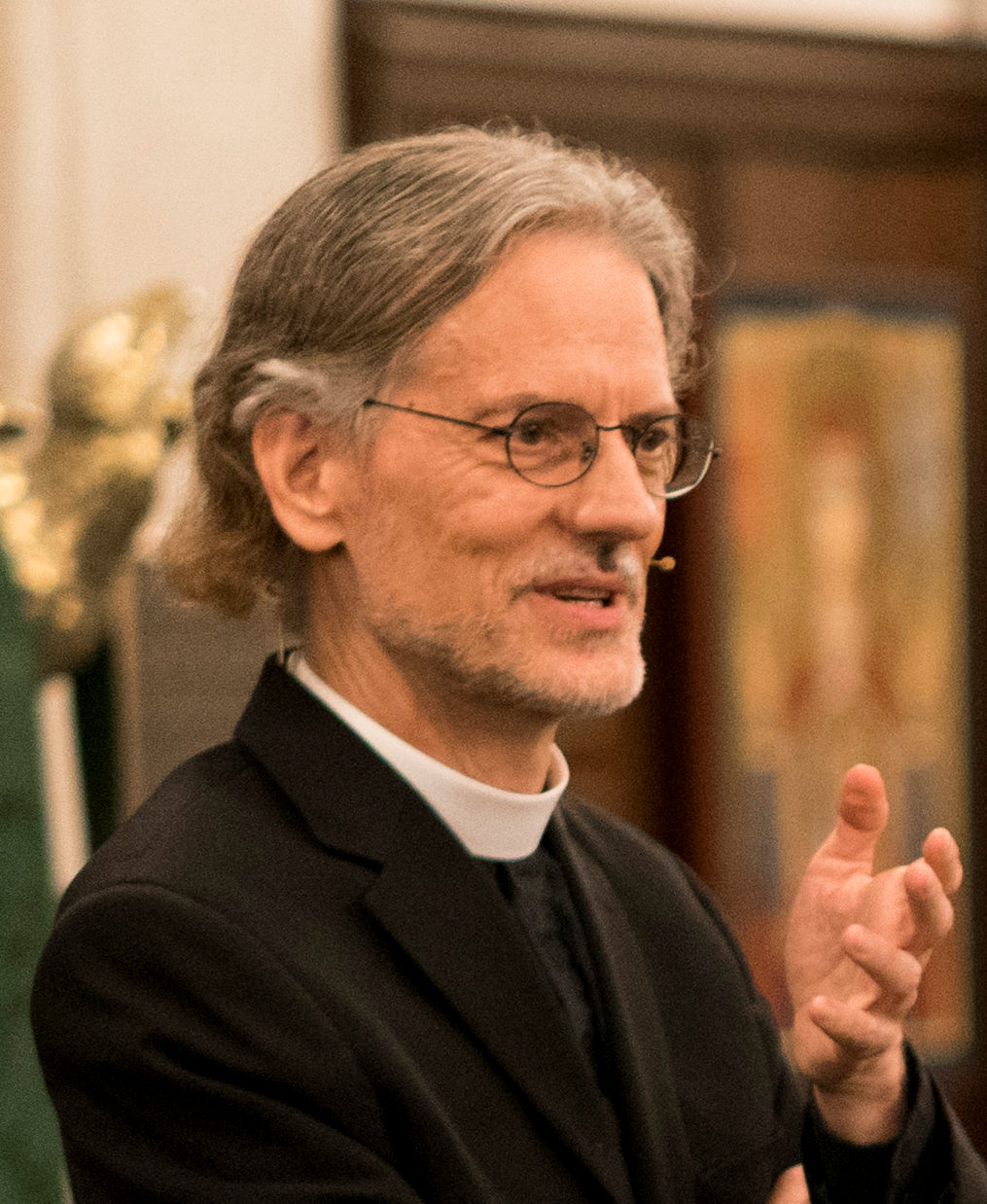 The Rev. Canon Victor Lee Austin, theologian-in-residence for the Episcopal Diocese of Dallas, is the author of a handful of books, including Friendship: The Heart of Being Human.
Bio current as of January 2026