

The Cost of Independence: A Christmas Meditation

[This text has been slightly adapted from Rev. Blackburn’s Pastoral Reflections meditation published Dec. 22, 2017.]
And this will be a sign for you: you will find a baby wrapped in swaddling cloths and lying in a manger (Luke 2:12).
Why does the Church make so much of the birth of Jesus? We don’t know anything about, for instance, the young life of Elijah or Noah or Abraham, all of whom served the Lord well in their time. While of course it has something to do with Jesus’ humanity—the Church being clear that Jesus needed to be fully man in order to redeem man fully—there is an aspect of Jesus’ infancy to which we would do well to attend, particularly in our current cultural climate. His dependency. Not only did Jesus pass through infancy and childhood, but in so doing Jesus needed to be fed, changed, potty-trained, told not to touch this or that, and the like. Eventually he needed to be taught how to learn to read, to add, to cut lumber. Even the Son of God, the Word made flesh, came into the world in need. Why?
Because to be in need is to be human.
Examples abound. “It is not good that man should be alone”—man is dependent upon woman, and woman upon man. The Church is a body, with different parts that mutually depend upon one another. Of economic inequality, “your abundance at the present time should supply their need, so that their abundance may supply your need” (2 Cor 8:14). Mary, God’s chosen to bear the Messiah, rides to Bethlehem to give birth, dependent upon her husband and the good graces of an innkeeper. We cannot live ten minutes without air, ten days without water, or ten weeks without food, and would be undone in a day if the sun failed to rise tomorrow. To be dependent is to be human.
Our world says otherwise. Why are nearly a million babies aborted annually in the US? Could it be that babies are dependent? Is it because babies are dependent, and need to be provided for? Why were the casualties of China’s One Child policy disproportionally baby girls? Is it because sons are thought to be more able to provide for aging parents? Why are roughly 90 percent of babies diagnosed in utero with Down syndrome aborted? The idea that Down syndrome robs a person of “quality of life” is smoke and mirrors. Is it because Down syndrome brings a special (and usually greater) kind of dependency?
On the other side of life, the “death with dignity” movement trades on the idea that there is something wrong with dependency. Dealing with an incontinent elderly man incapable of changing himself is hard. But why do we suggest his condition is undignified? Why do we reserve the term “dignity” for planned suicide, applauding those who refuse to be a “burden” upon others, while failing to see the deep dignity at work in the man or woman seeking to live life the best he or she can in the midst of suffering and need? Dignity has come to mean independence.
Yesterday, I found some telling words on a website sponsored by an organization called Death with Dignity: “Death with Dignity is about respecting a person’s ultimate authority over their own path.” It is a sturdy claim—that I am the master of my own soul, dependent upon and answerable to no one. But are we are actually meant to have authority over our own path? Everything hangs on the answer to a question unanswered, just assumed.
The casualties are not just the lives of the unborn, the elderly, or the otherwise vulnerable. By denying the beauty—and I do mean beauty—of dependence we squander the opportunity to become more of who God has made us to be. In other words, we lose the opportunity to become more human. The glory of God, and the glory of man, is expressed not primarily in the ability to reason, but in our ability to love. In other words, generosity. We are created to give, and to receive. The beauty of generosity is often both forged and reflected in the midst of crisis pregnancies and bedpans. In other words, the difficult and the awkward and the ugly. It is no wonder we recoil from dependence. It is by far the costlier road.
It the end, dependency is about God. Dependence means that, ultimately, I am not in control. And that can be a scary place to be. But it is the place of God’s choosing, given by God so that we realize we need Him. It is also a place that God himself has been, for Jesus came in the most vulnerable of ways, as an infant, that we might understand that dependence is not only human, but in some mysterious way, divine.
Augustine had it right: “Our hearts are restless until they find their rest in Thee.”
So did Paul Simon: “And a rock feels no pain. And an island never cries.”
About the Author
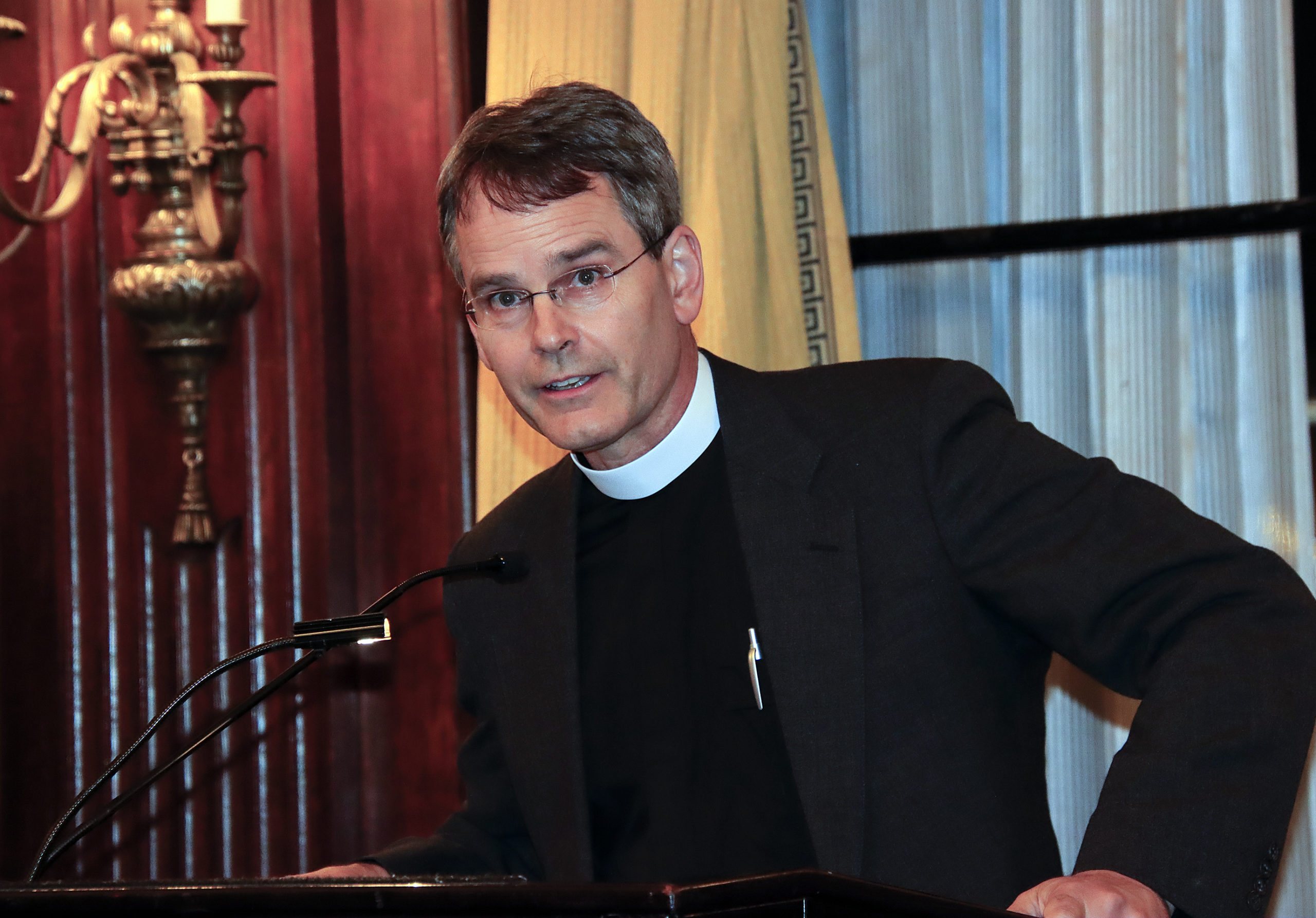
 Rev. W. Ross Blackburn, who lives with his family in Tennessee, has been a pastor in the Anglican Church in North America for 20 years. He has a PhD (Old Testament) from the University of St. Andrews in Scotland and has written articles for the Human Life Review and Touchstone, as well as educational materials for Anglicans for Life. Rev. Blackburn and his wife Lauren, married for 31 years, have shared homeschooling responsibility for their five children.
bio updated April 2024