


Film Life

Over the past few years, I have occasionally written in this space about films in which we see the persistence of pro-life concerns. These are worth noting, for the film industry, like most of our high culture, subsists within a largely progressive environment. My view is that, despite ideologies, in the long run “reality breaks through,” and if we look for it, we will find it—in films as in other places.
Take the ’60s sexual revolution, which, with its embrace of contraception and abortion, made it possible to separate sex and pregnancy. Over the decades, people have lost sight of an intrinsic connection between sexual intimacy and having children. The revolution also separated intercourse from marriage. One consequence of this, we are told, is that much of sexual activity today is mere athleticism, the mutual self-pleasuring of consenting adults who have no ongoing relationship with each other. Yet despite all this, the sexual revolution has not succeeded in suppressing a longing for children (which is one facet of the natural pro-life tilt of reality).
The longing for children persists in film. Take While We’re Young, an interesting example from 2013. The film opens with a close-up shot of an infant, snugly wrapped in a blanket with only its little head visible. The baby’s eyes are open and move a bit as we hear a woman and man talking. They, we later learn, are Cornelia and Josh, and as we can tell from their conversation—their awe of the baby—they really don’t know beans about children. It’s not long before the baby starts to whimper, then cry. Cornelia picks it up, awkwardly, and tries a little bouncing—the cry crescendos into high volume. Suddenly, another woman enters the room, rescues the baby from Cornelia’s hands, and demonstrates how to bounce and move around and make cooing sounds to calm the child.
This woman is the child’s mother; Cornelia and Josh are friends of her and her husband. Although most people in their circle have children, Cornelia and Josh do not. We hear them remark that they are glad they never had a baby. Yet things are not so simple. As we later learn, they tried very hard. Josh describes how he had to put “a long needle in her butt” every day; they had miscarriages; they decided not to try any more. What they say to each other—and what they say to the world—is that they are glad they don’t have a baby. At the end of the film, though, things have changed, and their friends drop them off at the airport for a flight to Africa to pick up the child they are adopting.
Noah Baumbach, the film’s director, is an astute cultural critic; his most notable film is likely Barbie, the screenplay for which he wrote with Greta Gerwig (I have written about it here). Broadly, the subject of While We’re Young is middle-aged people having to come to terms with the loss of their youth; coming to terms with infertility is but one dimension of that larger theme. But babies frame the story. The film opens with Josh and Cornelia’s cluelessness in handling a newborn, while hiding their longing for a child behind brave assertions about the right choice they have made in not having children. It ends with them realizing that what they called their “choice” was simply an accommodation to infertility.
With that understanding, they are free to admit their desire for a baby and subsequently become open to adoption. So, their longing is going to be satisfied—not romantically but realistically. Their friends have told them it’s difficult to love children as their needs impinge on everything their parents do, every hour, day and night. But Cornelia and Josh have deluded themselves—Josh especially—about the truth of their life so far. Although they talked bravely about the joy of being free of children, in fact they have never acted with the spontaneity they claimed their freedom from children enabled them to enjoy. In sad truth, Josh is stuck in an endless, pathetic documentary project while he teaches film at a night school. Deciding to adopt is a piece of coming to terms with larger-scale personal failures and limitations.
While We’re Young is hardly alone in ending with the arrival of a baby. Another happy instance is the 1988 John Hughes film, She’s Having a Baby. And while Barbie isn’t welcoming a baby—yet–it does end with Barbie having chosen to be a real woman and arriving for her first visit with her gynecologist.
A birth is both an end and a beginning. It marks dramatically the end of a life of so-called freedom, however confused or self-deceptive that “freedom” really is. And in this sense, I think, it fits as the end of a film. What is about to begin is an as yet unknown story that’s full of possibility. This story, with the just-born child as its central character, could turn out in many different ways.
Once upon a time, the birth turned out to be dramatically different. That happened some two thousand years ago, and it inaugurated a new story. In that Babe, every human desire still can find its true fulfilment. The film that might begin with his birth is a film yet to be finished; but once finished, it will never be supplanted. We, perhaps, may have children; each child’s birth ends and begins a story. Our children grow up and, perhaps, have children of their own, children who also begin and end stories. Uniquely different, some of us believe, is the birth we remember at this time. The natural longing for a child has its supernatural fulfilment—its only lasting fulfilment—in Him.
About the Author
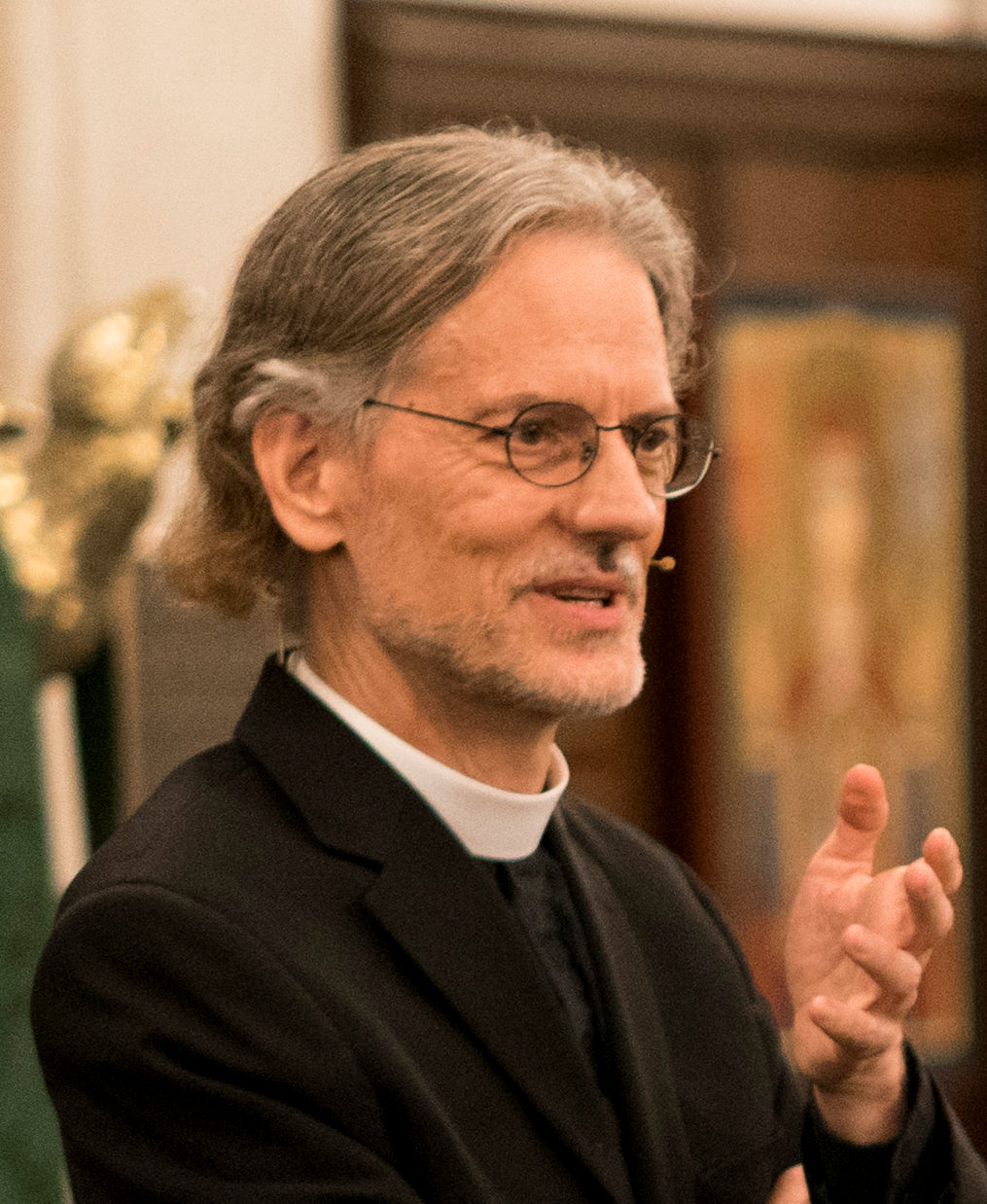 The Rev. Canon Victor Lee Austin, theologian-in-residence for the Episcopal Diocese of Dallas, is the author of a handful of books, including Friendship: The Heart of Being Human.
Bio current as of January 2026