

When All Is Lost: Dealing with Pro-Life Despair

Throw in the towel?
Every year, vulnerable persons and their defenders are more effectively repressed by distorted ideologies, automated technologies, and political concessions that stifle our celebration of human dignity. Unborn human beings in their mothers’ wombs and in research laboratories throughout the world are subjected to death and mutilation like never before. The elderly, ill, and disabled are increasingly experiencing neglect and poverty, aggravated by a persistent drumbeat that urges them to bow out with assisted suicide. It seems that the space for pro-life action is diminishing.
This weighs heavily on individual pro-lifers and the movement. A despairing and fearful heart cannot generate the flame of love that inspires conversion and motivates action.
Shutting our eyes is not an option. We remove both our understanding of the offending realities and the opportunity to recognize glimmers of light—cracks in the apparently oppressive walls that close in around us.
Truth and Hope Rely on Each Other
We may, however, be encouraged that truth has a way of seeping through those cracks and shattering the foundations of ignorance.
Truth is not an abstract force or mere record of information. It is a personal relationship between each of us and reality, residing in both our intellects and hearts. Our experience of truth begins in our will to perceive it, and it is formed by habits of virtue and skill.
For example, truth and hope go hand-in-hand. The link between truth and hope is not often discussed, yet it is crucial. No one can see truth if they do not hope for it, and truth cannot be shared with another person who doesn’t yearn to be enlightened. As a virtue, hope is not merely wishful thinking or intentional blindness regarding obstacles. It is the firm expectation that what is known through faith about the destiny of a person, society, or world will come to be. Hope is ultimately built on trust in the authority and dependability of God’s revelation—in God as Truth. A circular and mutually reinforcing relationship therefore binds truth and hope together, mediated by faith.
God as Our Object
Why does God need to be part of the equation? Can’t we have a secular hope?
The ancient Greeks tried that. It led them to consider hope with deep suspicion, treating it as a morally ambiguous emotion or an active delusion. When Thucydides wrote his classic History of the Peloponnesian War, he highlighted the advice of the Athenian envoy who dismissed hope as “an expensive commodity” that leads to ruin because it relies on an unpredictable future rather than present strength and reason. Thucydides framed the opposing Melians as fools who appealed to hope when facing the overwhelming power of Athens.
For the philosopher Plato in the Philebus, ungrounded hope is an illusion that deceives the soul and distorts rational planning. In the Nicomachean Ethics, Aristotle distinguishes genuine courage from mere optimism. Those who act out of high hopes merely rely on past luck or confidence in their strength; when circumstances change, their “courage” evaporates. For the Stoics like Epictetus, hope was explicitly viewed as a mental disturbance, an unhealthy attachment to external outcomes beyond a person’s immediate moral control.
So why did the Christians, particularly Augustine and the medieval Scholastics, elevate hope to the status of a primary, theological virtue? They had a different object. The ancient Greeks had focused on wealth, political victory, health, fame, etc.: objects that were subject to decay, chance, and human limitations. The Christians, on the other hand, argued that true virtue requires an ultimate purpose capable of fully satisfying human desire. This is none other than our loving relationship with God. Hope toward such an utmost and secure object is not a hesitant wish but a sustained and willed disposition that can be purposely cultivated—an opportunity to enjoy the grace of God for its perfection.
Bringing Hope to Life
How can we cultivate hope?
One way is to embrace magnanimity, or “greatness of soul.” This does not mean succumbing to inordinate pride but striving to achieve or confront great and arduous things with confidence in God’s providence. We can practice the skill of seeing beyond immediate obstacles and affirming clearly that our difficulties are not really impossibilities, for we and the persons we defend bear a human dignity with a divine origin. The greatness of the pro-life effort is enabled by hope in that special relationship with God.
Also, as Thomas Aquinas wrote, hope is found as the compromise between two vices: despair and presumption. Presumption is overestimating human power or expecting divine reward without conversion and effort. We can cultivate filial fear—a deeply felt reverence for truth and reality—which limits presumption while guarding against despair through trust in God’s mercy. This is a hard-nosed attitude, but it is also an outpouring of awe regarding the beauty of human nature and God’s plan for us.
We can, through regular communication and joint activities, reinforce these virtuous habits as a community that outwardly supports and prays with each other with an explicit appeal to God—not only for the success of our efforts, but for the grace that infuses an authentically courageous hope.
Finally, hope is not a passive wish; it is movement toward an object. Aquinas notes that hope generates activity because expectation of great things mobilizes energy. We can translate hope into deliberate action because engaging in practical steps toward a difficult goal reinforces our confidence that the goal remains achievable. We might say that gain reduces the pain—and it has the cumulative power of an avalanche.
In all these ways, it is possible to create the freedom we need for pro-life evangelization. The gentle breath of hope can become the forceful gale that propels us to the outcomes we can only imagine in these dark times.
Bio:
Christopher M. Reilly is a co-editor of the Human Life Review. He holds a Doctor of Theology degree. He is a co-editor of the forthcoming book The Abolition of Meaning: 15 Catholic Thinkers Challenge the AI Paradigm and is author of AI and Sin.
About the Author
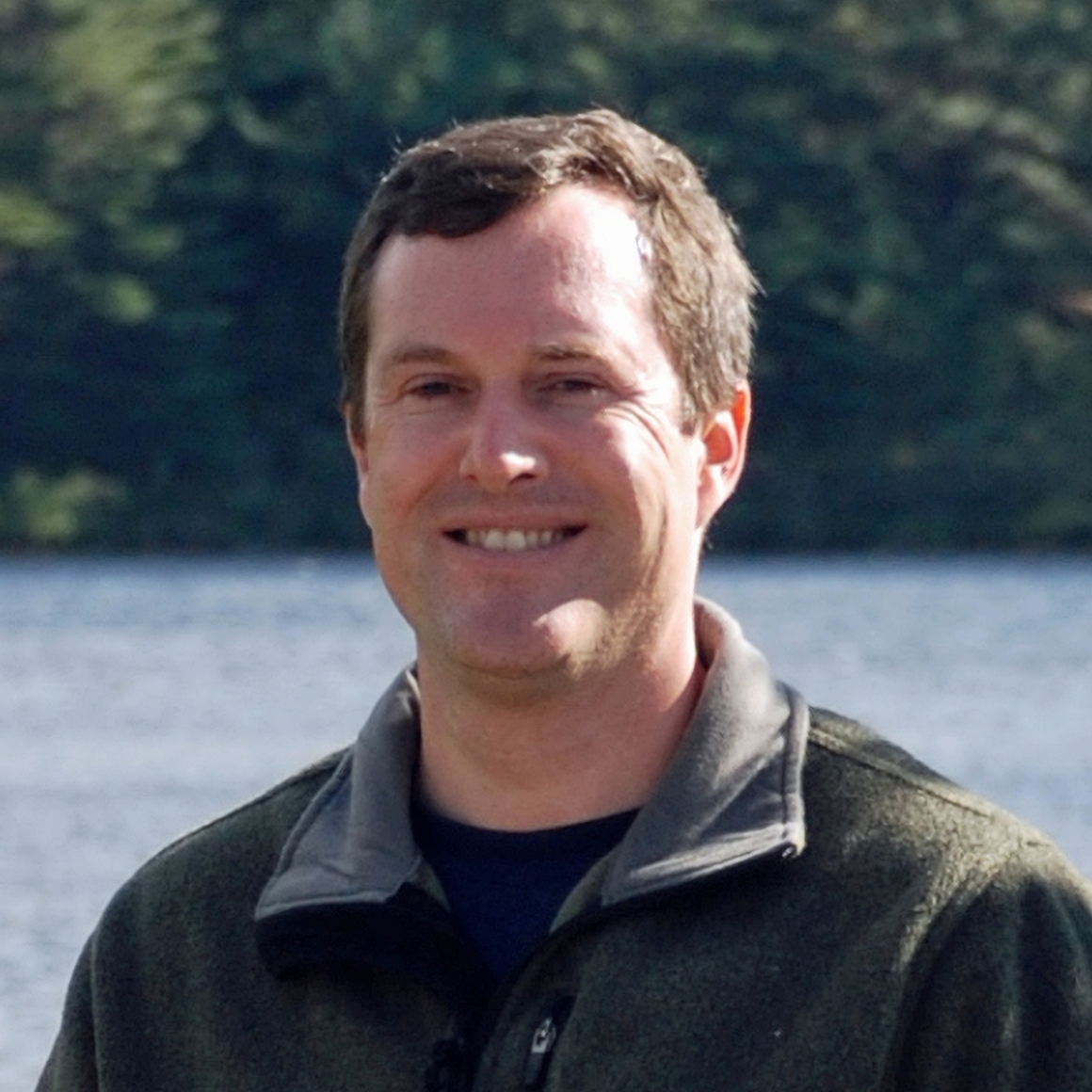
Christopher M. Reilly is a co-editor of the Human Life Review. He holds a Doctor of Theology degree. He is a co-editor of the forthcoming book The Abolition of Meaning: 15 Catholic Thinkers Challenge the AI Paradigm and is author of AI and Sin.
bio as of October 2026