


Answering the Early-Morning Phone Call

I have made them, and I have received them, and chances are, dear reader, you also have done so. The phone lights up—you recognize the caller, but it’s very odd these days for a phone call to arrive without first a text or an appointment. So of course you pick it up. Already your stomach is a bit tight. The voice is friendly, how-are-you-and-all-that, and you respond in a friendly way, but it’s brief. And then the caller’s voice chokes up. “She died a few hours ago.”
I made those calls when my wife died. There’s no easy way to break the news for the reason, I think, that there’s no wrong way. Someone we both have known is no longer alive amongst us. And so, of course the news is important and must be said. I called people who knew Susan as a mother, a daughter-in-law, a mother-in-law, a sister, an old friend from high school, a neighbor; everyone I called had connected with her in life, had spent time with her, had known her as the particular person she was. And that particular person was no longer alive, would never again smile at their stories, never again hold their hand, never again nod in their direction.
One thinks of King David, grievously bemoaning his sin and praying for his little boy’s life—but when he learned the boy had died, got up and washed himself and broke his fast. “He will not come to me,” David said; “I will go to him.”
But while David spoke truth, perhaps he was too quick to return to normal life. We have received the call and a crater has smashed into our life. I think we need to endure the absence for a while. When Augustine was about 20 years old, he had a very close friend who almost died, recovered from his coma, but then reverted and did die. Augustine writes some painfully beautiful paragraphs about this. He says his whole life became anguish to him. “All that I had shared with him was without him transformed into a cruel torment. My eyes looked for him everywhere, and he was not there . . . nor could they now tell me ‘look, he is on the way,’ as used to be the case.”
Death is a portal that opens only in one direction. Since all of us will die, it behooves us to meditate that we someday will follow our departed friends, that someday other people will be making that phone call to other friends about us. Part of what we should hang on to is the abruptness of death, its unarguable finality. I will never again do [fill in the blank] with that friend. We have encountered the terrible rending in the fabric of reality.
To grieve is to face this. And may I say, to be pro-life is to face this, the hardness and, in a sense, the wrongness of death. Every human being is relational, and death rips asunder the relations. That’s why we should oppose euthanasia. Euthanasia is an attempt to assert our will over death, but it does nothing to defeat death. The inevitability of death is also why we should raise questions about the tendency of medicine to see death as medicine’s particular enemy. At some point every one of us will have to go through that portal, and it is no good pretending that our own “date with destiny” can be put off indefinitely.
What I’m saying is, that early-morning phone call, our tears at the grave, and the people we miss seeing are all part of something that is deeply human and deeply good despite all the pain. We are made for communication with each other. And to feel how that has been ruptured by death and nonetheless to answer the phone is a sign of the hope that lies deep inside each of us, the hope that death is not the end of the human story.
About the Author
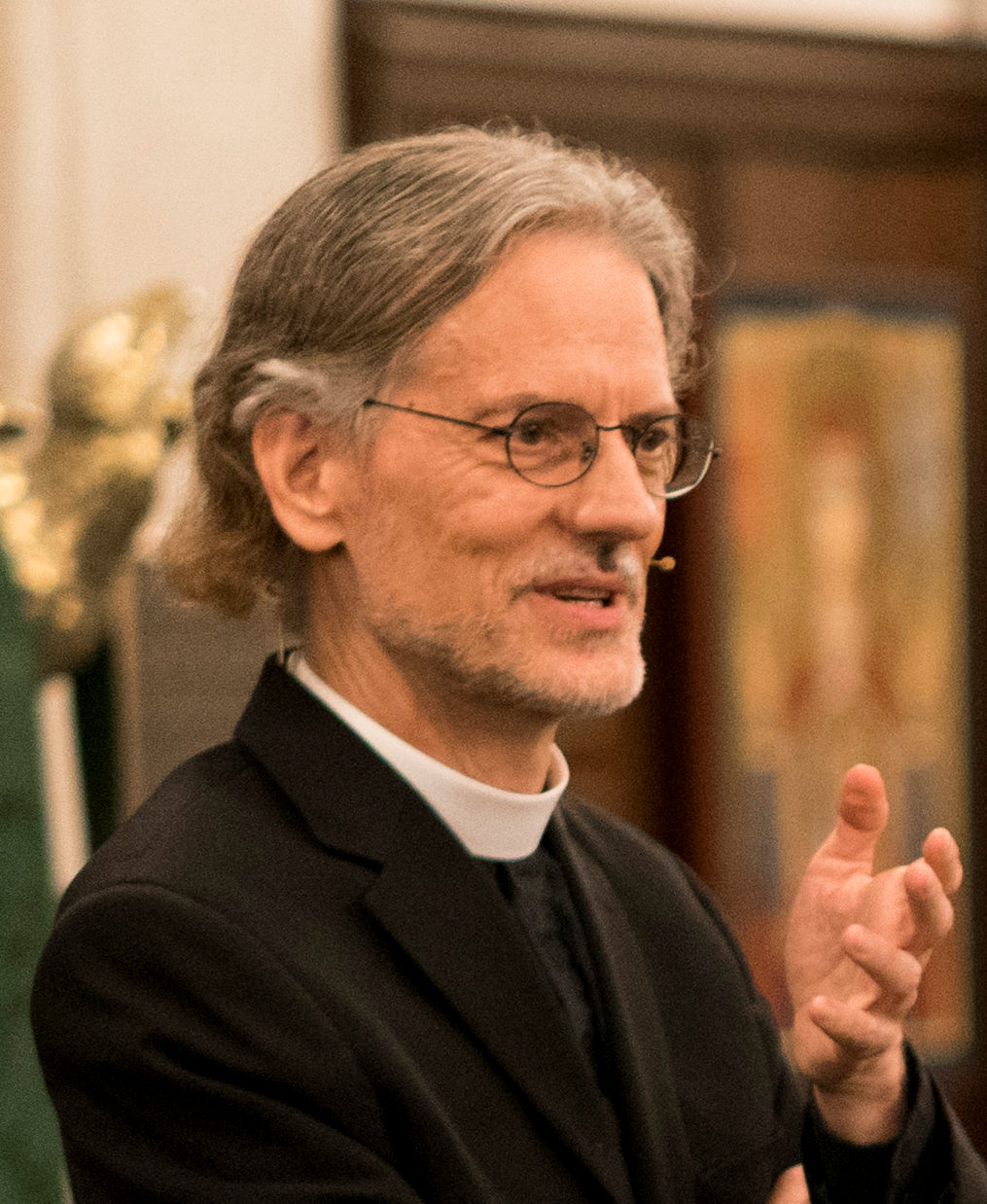 The Rev. Canon Victor Lee Austin, theologian-in-residence for the Episcopal Diocese of Dallas, is the author of a handful of books, including Friendship: The Heart of Being Human.
Bio current as of January 2026