

Robots and Clones and Humans

The Human Life Review has a long-standing interest in identifying and encouraging pro-human influences in our culture. I think of them as signs that in the long run, reality comes through. To be anti-abortion or anti-euthanasia, for instance, one has to put ideology ahead of reality. What I mean is that abortion and other such practices can continue only when people deny the reality of what is going on. Sooner or later, reality breaks through.
May I draw your attention to a couple of novels by Kazuo Ishiguro? He is a Japanese-born British novelist who has won the Nobel prize for literature, and thus he is a significant cultural influence. At the same time, his work embodies a profound respect for human life and exposes deeply troubling ways we (increasingly) think about (and treat) human beings. (In what follows there are various plot spoilers. Yet the novels, being the work of a master, are worth reading more than once, and thus worth reading even if you know something of how they will turn out.)
In Klara and the Sun (2021), Ishiguro wrote about the interior life of a particularly empathetic robot. In the world of the novel, parents have only one child and a number of negative consequences follow. To help their child mature in this world, the best parents purchase for their child an Artificial Friend. Klara is one such AF. We understand the world through her eyes and her desire to make sense of it herself. At one point she does a particularly dangerous self-sacrifice of needed fluid to try to help the child whose AF she is. And at the end of the novel, worn out and no longer needed, she passes her days sitting—she can no longer move—in an industrial lot where the sun can shine on her and she ponders her memories, awaiting the day when she completely wears out.
Ishiguro is too good of a novelist to lay out a simple moral for his story. But even from this very brief account, one can see he has much for us to think about.
The first novel of his that I read came several years earlier. It is Never Let Me Go (2005), a story (one gradually learns) about a boarding school for clones. These children (one gradually notices) never go home for vacations. Their teachers emphasize how important it is for them never to smoke, which is a much worse trespass than for them to have sex with one another. The bigger picture slowly comes into view—and the 2010 film, with Ishiguro’s close involvement, makes this clear from the beginning. We are in an alternative present in which, sometime after World War Two, a technique for cloning humans was perfected and a system was put into place. Within a generation, deaths from various diseases had been eliminated.
The children learn that their purpose in life is to mature and become good donors. Each of them, if they do well, will be able to make up to four donations. Some of them, before they start down that road, can volunteer to be carers, persons who help the others through their donations and their recovery. The voice of the novel is from one of these carers who is thinking back over her life and what she will do next.
An interesting sub-plot concerns a Madame who came to the school to visit them from time to time, to buy their art. A few of them seek her out a decade later; it is a dispiriting visit when they learn how entrenched against them the social forces are. If there weren’t this system of cloning and housing and nurturing of the clones towards their donations, then the cancers and so forth would all return (without the clones there would not be the various never-named organs available for transplant).
* * *
I often commend these two novels (and the film of Never Let Me Go) as containing vivid provocations against complacency about our culture, even though we do not have a system of clones nor do we (yet) have robots who serve as AFs. But there is another side to it all, a deeper pro-life meaning that I see in these books.
Of course we should never create clones as sources of spare parts for our own benefit. Although manufactured to our specifications, they would still be human beings. And there’s the rub. In Ishiguro’s telling, these clones and AFs are manifestly capable of the range of emotion, feeling, thought and wonder that any child or adult might have. They are capable of a sense of pride at having a role in a system that is larger than themselves. The reader can easily think: Kathy (the narrator), although a clone manufactured (as they all were) to be sterile, could truly be a friend. Or in the other novel, Klara, though a product of manufacture, thinks in a way that would be worth our attention, even the attention we would give to a human friend. In each case, we are moved to a certain identification with the characters, a sense that, regardless of whether they should have been created, once they have come into the world, we should find a way to live together.
And that’s not a bad pro-life message for our everyday world, whether we are talking about an unborn child or a worn-out laborer or, indeed, anyone else.
About the Author
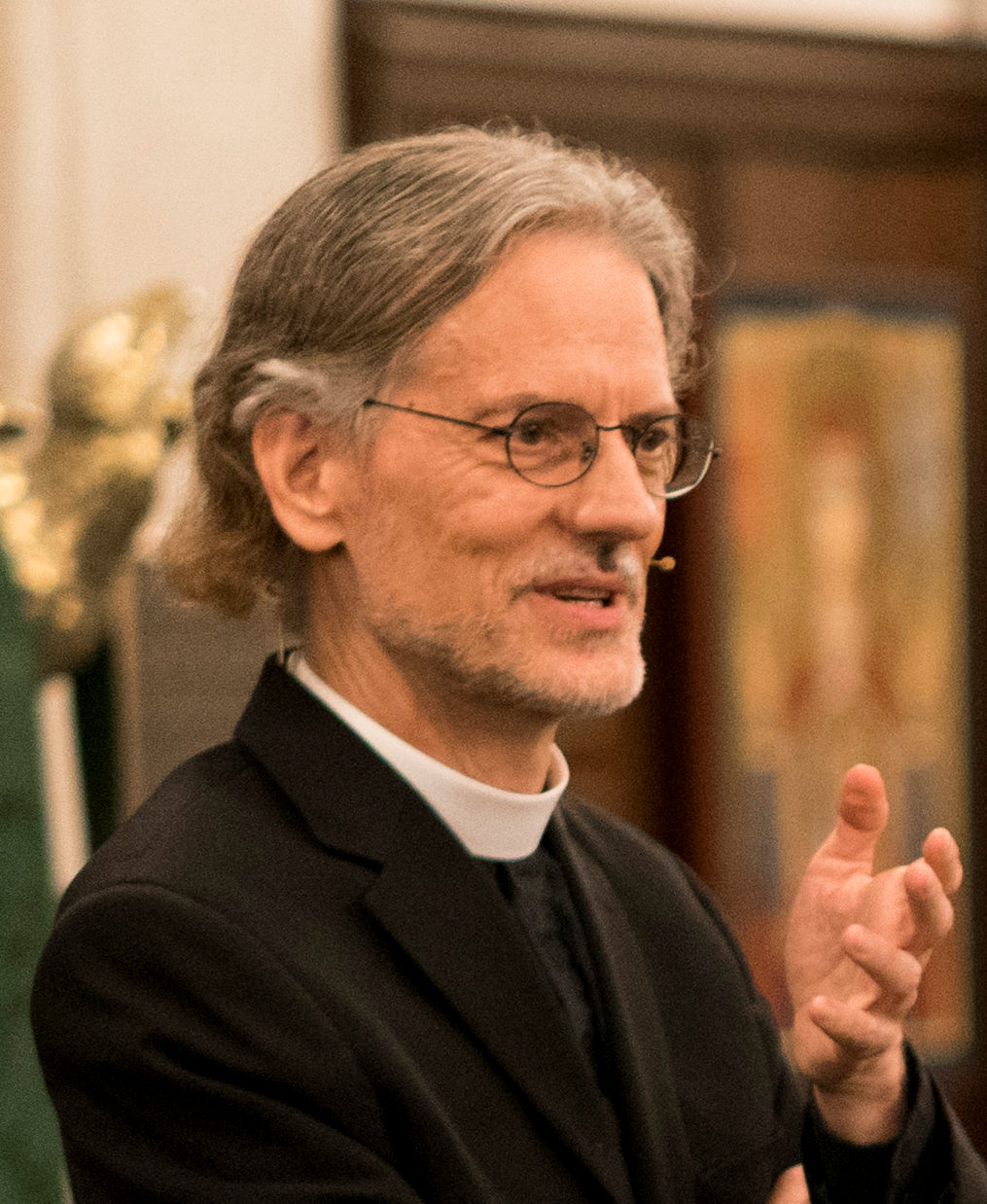 The Rev. Canon Victor Lee Austin, theologian-in-residence for the Episcopal Diocese of Dallas, is the author of a handful of books, including Friendship: The Heart of Being Human.
Bio current as of January 2026